

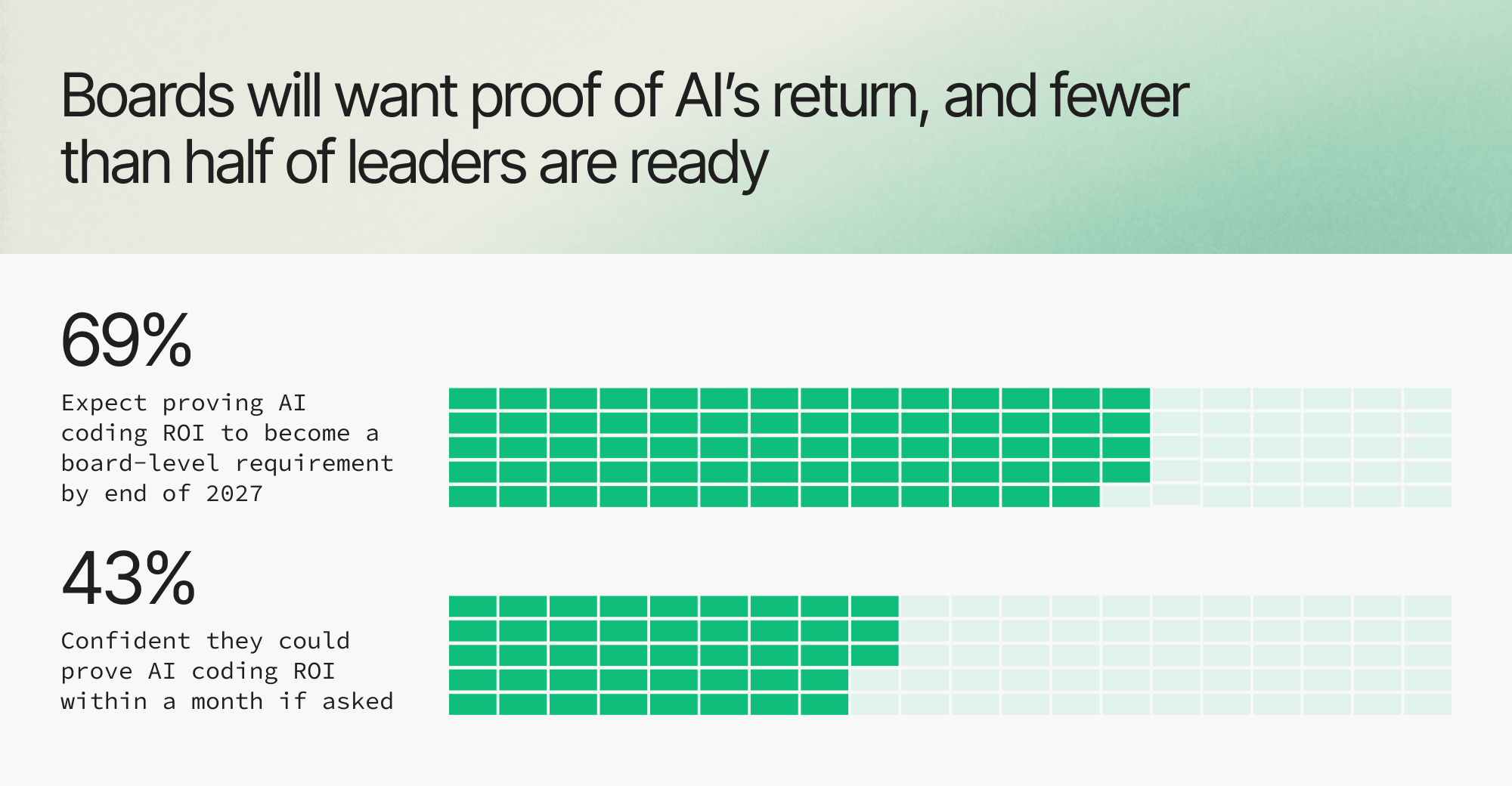
By the end of 2027, 69% of European IT leaders expect proof of AI ROI to become a board requirement, but only 43% are confident they could demonstrate that ROI within a month.
Leaders who say they can calculate the full cost of AI-powered delivery are 3 times more likely to believe they could demonstrate its ROI to the board within a month (70% vs 23%).
AI coding tools can save developers time on writing code, but they also increase the workload (and cost) for review and testing. Unless organizations account for that downstream cost, they can’t reliably prove whether faster coding makes software delivery more cost-effective.
To mark the opening of CloudBees’ new European office in London, and to show how development teams in Europe are managing the costs and risks associated with agentic coding, we’re sharing an early look at our new report, The State of Code Abundance 2026, Europe edition.
The new edition builds on our US State of Code Abundance report, which found that leaders see AI delivering value but struggle to tie their spending to outcomes.
This time, we surveyed 450 IT leaders in Germany, France, and the UK on similar questions. Here’s a first look at what they said.
Want to see how your organization’s AI cost calculations compare? Subscribe to get the full Europe report as soon as it’s available →
Key findings: What 450 European IT leaders reveal about AI coding costs and ROI
Europe’s AI coding investment is growing, and its full cost is hard to see
One in five European organizations (22%) already spends €1 million or more per year on AI coding tools and their use. But that figure doesn't capture everything AI-powered delivery costs.
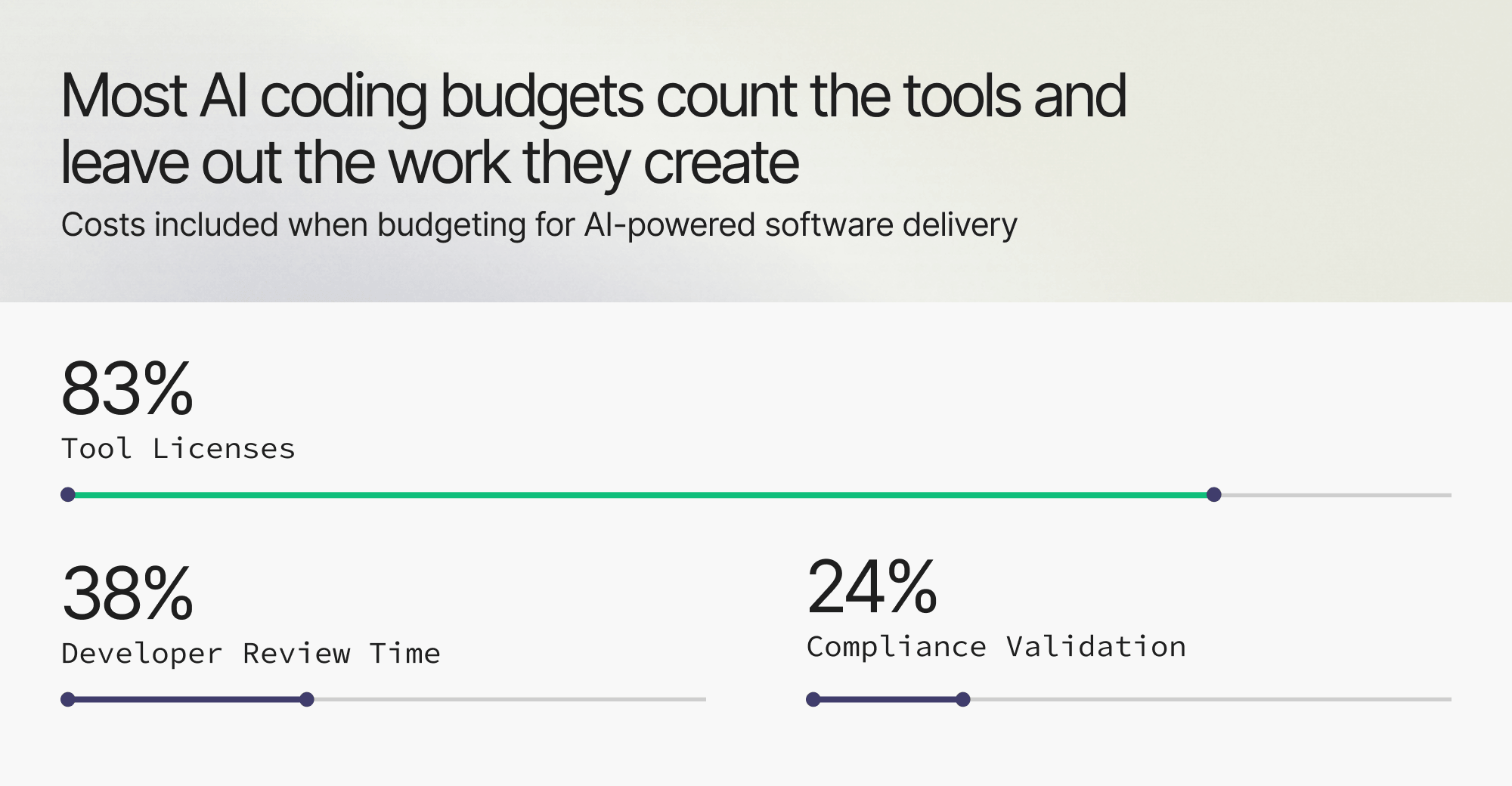
More than half of leaders (57%) aren’t confident they can calculate the full cost of delivering software with AI. Most organizations (83%) include AI coding tool licenses in their AI-powered delivery budget, but only 38% include the time developers spend reviewing AI-written code. Only 13% say a single executive or function has a complete view of what AI-powered delivery truly costs.
Without a complete picture of these costs, leaders can’t demonstrate the ROI of AI coding, so decisions to increase or halt further investment rest on incomplete information.
The question of AI ROI is heading to the boardroom
Faster development doesn't necessarily tell executives which AI coding investments are worth expanding. While 71% of European IT leaders say AI coding tools have accelerated development, only 43% say they can demonstrate improved business outcomes. Another 43% say they cannot.
The US picture is similar: 68% of US leaders say AI has clearly delivered business value, yet they can tie only 31% of their AI-related spend to specific business outcomes.
Without evidence that increased speed correlates with business results, leaders risk directing more funding toward AI coding tools that don't deliver enough value to justify their cost.
As AI writes more code, checking and ownership matter even more
At most European organizations (58%), the time spent checking AI-generated code is less than the time AI saves, so the speed gains carry through. For a third (34%), though, checking takes an hour or more for every hour AI saves. More leaders also say the tools have increased the amount of poor-quality code they produce (46%) than say they’ve reduced it (32%).
As more AI-written code reaches production, it’s also getting harder to know who stands behind each change. A majority of leaders (53%) say AI-generated code has made accountability harder at their organization, compared with only 19% who say it has made it easier. In fact, only 22% could immediately identify who approved an AI-generated change that was running in production.
“Boards everywhere are asking new questions about AI-generated code: Can we prove what changed, who approved it, and why was it safe to ship?” Ashwin Mithra, CISO — Cloudbees
But having auditable records is exactly what lets a team connect AI costs and results to specific changes, which forms the evidence needed to build a board-ready ROI case.
Most organizations are already responding, with 75% saying they’ve strengthened software governance since adopting AI coding tools. Approval processes have further to go, though, with two-thirds of leaders (66%) saying theirs were built for the pace of human developers and weren’t designed with AI-written code in mind.
Sovereignty and regulation weigh more heavily on continental Europe
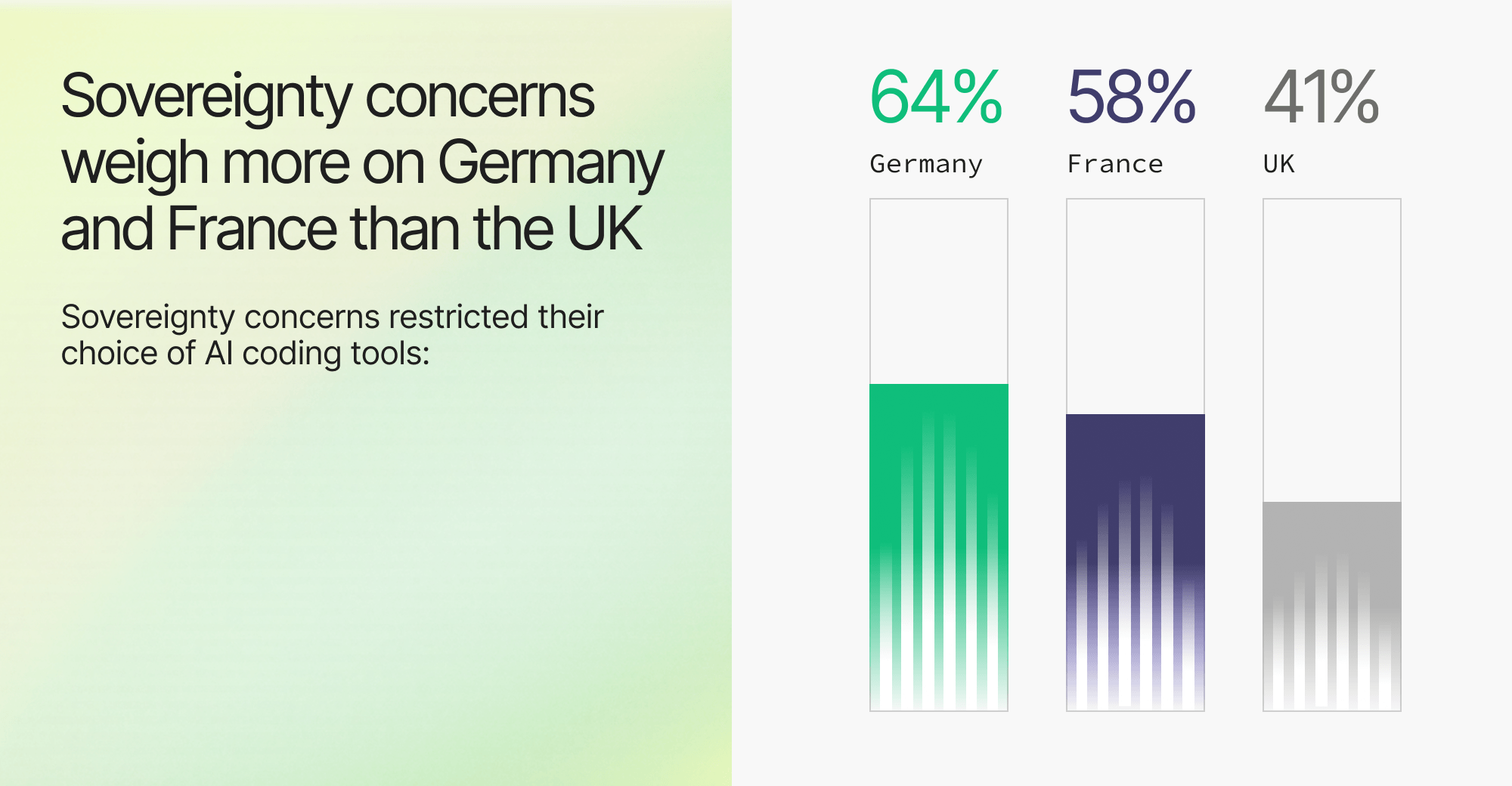
IT leaders in Germany and France now feel more pressure to achieve data sovereignty than their peers in the UK. In Germany (64%) and France (58%), leaders say sovereignty concerns, such as exposing proprietary code to external AI providers, have restricted their choice of AI coding tools, compared with 41% in the UK.
The same divide shows up in regulation, which ranks as a top governance concern for 49% of leaders in Germany and 47% in France, against 35% in the UK.
Regulation also adds compliance costs to AI coding, but with only 24% of European organizations including compliance validation in their AI delivery budget, that creates a cost visibility gap.
Whatever tools your market allows, the board’s question is the same: What did AI cost, and what did it return? Leaders who can see the full cost are best equipped to answer it.
Want to learn more about how other European organizations are governing AI-written code, and how your organization compares? Subscribe to get the full Europe report as soon as it’s available →
In the meantime, read our US State of Code Abundance report to see how US organizations are managing the cost and governance of AI-written code.

